
HVAC & Duct Mold in the Lowcountry
Musty air when the AC kicks on, dark spots around vents or a damp air handler closet? We connect Charleston-area homeowners with local mold inspection and remediation companies for free, no-obligation quotes, and help you sort out when an HVAC contractor needs to be involved.
Get a Free Quote Call (727) 300-6656Why air conditioning systems grow mold here
An air conditioner is a dehumidifier as much as a cooler. As warm, moist air crosses the cold evaporator coil, water condenses and drains away through a pan and condensate line. In Charleston that system works overtime: the SC State Climatology Office puts August mean relative humidity at 79%, higher than the 76% recorded in Columbia and Greer, with July at 77%. NOAA normals show average July highs of about 91 degrees at Charleston International Airport.
All that moisture has to go somewhere. When a drain pan rusts or a condensate line clogs, water sits in the air handler. When ducts run through a hot attic or a humid crawl space, cold duct surfaces can sweat, especially if insulation is torn or missing. When supply registers are much colder than the room air around them, condensation forms on the grilles. Dust in the system gives mold something to eat.
Signs mold may be in the HVAC system:
- A musty or “dirty sock” smell that starts when the system runs
- Dark spots on or around supply vents and return grilles
- Water in or around the air handler, or a drain line that keeps backing up
- Visible growth on the evaporator coil, blower or inside the cabinet
- Wet or sagging duct insulation in the attic or crawl space
Spots on a vent are not always mold coming from the ducts; sometimes it is condensation on the grille itself. Our article on mold in AC vents explains how to tell the difference.
What an HVAC mold job typically involves
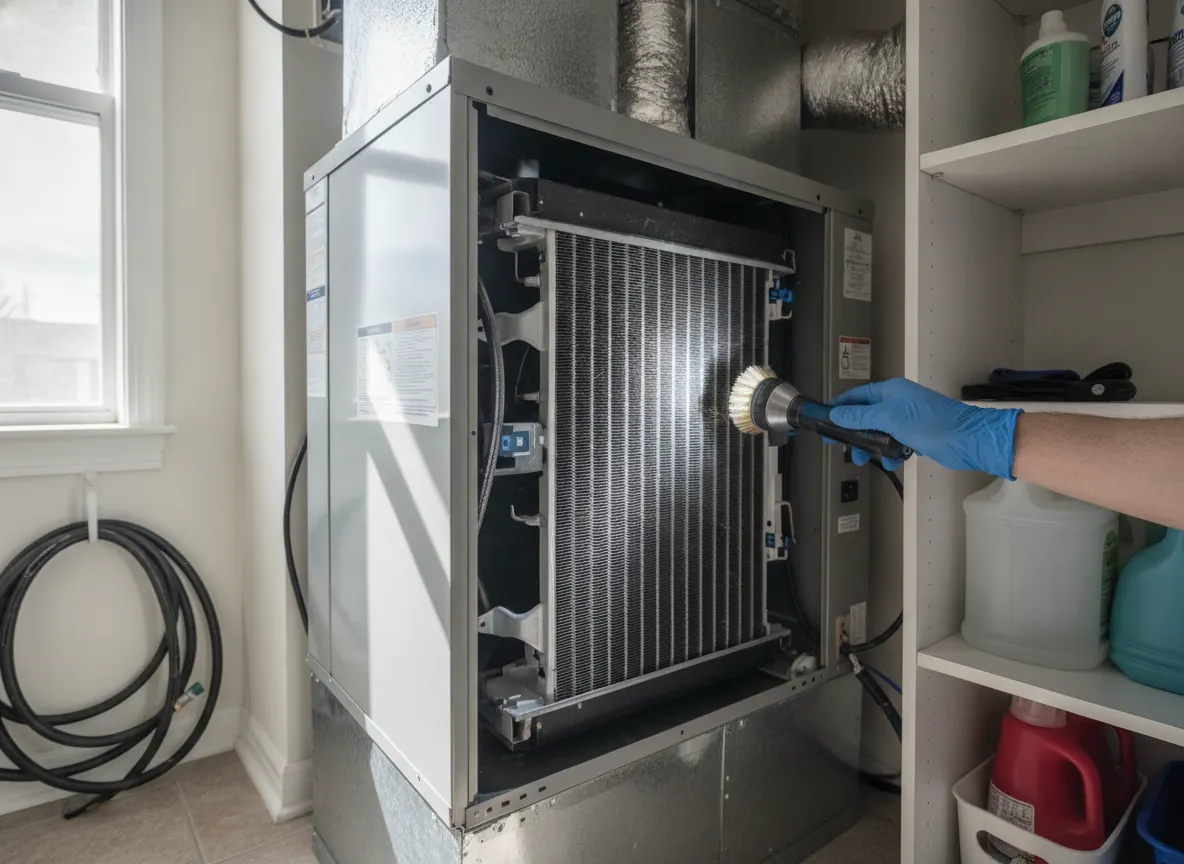
HVAC mold usually takes two kinds of expertise. A mold remediation company will typically assess where the growth is, contain the work area, clean affected components and surfaces, and handle any mold in nearby drywall, ceilings or the air handler closet. An HVAC contractor deals with the equipment: clearing condensate lines, replacing a corroded drain pan, cleaning or replacing a coil, sealing and insulating ducts, and correcting system sizing or airflow problems that keep humidity high.
Ductwork is a judgment call. Some duct materials can be cleaned; heavily contaminated flexible duct or duct board is often replaced instead. Ask each company to explain which approach it recommends and why, and get the answer in the written scope.
If the air handler or ducts are in the attic, the mold may not stop at the system. See attic mold and crawl space mold for those areas.
How an HVAC mold job usually goes
The full mold remediation process covers containment, cleaning and clearance.
Request quotes
Tell us what you smell or see on the free quote form. We usually reply the same day.
Inspection
The air handler, coil, drain pan, ducts and nearby surfaces are checked. An independent mold inspection can help if the source is unclear.
Written scope
The scope should say who handles the equipment, who handles the mold, and whether ducts will be cleaned or replaced.
Cleanup and repair
Components are cleaned or replaced, drainage is fixed, and duct leaks and insulation are addressed.
Humidity check
Ask whether indoor humidity will be measured afterward, since a system that cannot keep humidity down invites mold back.
When an HVAC contractor is needed in South Carolina
Cleaning mold from surfaces is one thing; altering, repairing or replacing mechanical equipment and ductwork is HVAC work. For general and mechanical contracting under SC Code Title 40, Chapter 11, the SC Contractor’s Licensing Board’s 2023 legislative update says, “A license is now required when the total cost of construction is greater than $10,000.” Related rebuild work such as drywall or insulation can fall under the Residential Builders Commission, where specialty contractor registration applies when the undertaking exceeds $500 (SC Code §40-59-20). Ask any company doing equipment or duct work for its SC license or registration.
In the City of Charleston’s Special Flood Hazard Area, the city says HVAC ductwork replacement on an existing structure requires a permit. This is general information, not legal advice.
South Carolina has no mold-specific license. South Carolina’s environmental agency (SCDES) says there are no state or federal laws, regulations or standards for mold, and it cannot test or inspect for mold in homes. A bill (H.5109) to create a state mold board was introduced in 2026 but has not passed as of October 2026. So ask any company about its training and certifications, its insurance, and the SC contractor license or registration for any rebuild work, and get the scope in writing. See what South Carolina law says. This is general information, not legal advice.
What HVAC mold remediation typically costs
Typical national ranges from cost guides, 2024–2026 — not quotes.
| Item | Typical range |
|---|---|
| HVAC system incl. ducts | $3,000–$10,000 |
| Mold inspection | $450–$800 (HomeAdvisor data via Bob Vila: $299–$1,014, avg about $656) |
| Air sample testing | $250–$350 (advanced up to $700) |
HVAC is one of the costlier places to find mold because equipment and ductwork may need repair or replacement as well as cleaning. The real figure comes from the companies’ on-site assessment. See the mold remediation cost guide for more.
Frequently asked questions
Why does my AC smell musty when it turns on?
A musty smell at startup often points to moisture in the system: a wet drain pan, a clogged condensate line, a dirty evaporator coil or damp duct insulation. Mold and bacteria can grow in those spots and release odors when air starts moving. An inspection of the air handler and ducts can find the source before anyone starts cleaning.
Is mold coming through my vents?
Sometimes. Dark spots on vents can be mold growing on the grille from condensation, or dust and debris blown out of the ducts. Growth inside the air handler or ducts usually comes with a musty smell when the system runs. A professional look at the coil, drain pan and ductwork tells you which problem you actually have.
How much does HVAC mold removal cost?
Cost guides put mold remediation in an HVAC system, including ducts, at about $3,000–$10,000. Costs climb when ducts or equipment must be replaced rather than cleaned. An inspection typically runs about $450–$800. These are national estimates; the real price comes from an on-site assessment by the companies you talk to.
Do I need an HVAC contractor or a mold company?
Often both. A mold remediation company handles containment and cleaning of mold, while an HVAC contractor handles drain pans, coils, ductwork and equipment. In South Carolina, the Contractor’s Licensing Board says a mechanical license is required when the total cost of construction is greater than $10,000. This is general information, not legal advice.
Can duct cleaning alone fix mold in the system?
Usually not by itself. If the moisture problem behind the mold, such as a clogged drain line, sweating ducts or high indoor humidity, is not fixed, the growth tends to return. The EPA notes that cleaning mold without fixing the water problem means it will most likely come back. Ask how each quote addresses the moisture source.
Seeing or smelling mold? Get a clear plan.
Free, no-pressure quotes across Charleston, Mount Pleasant, North Charleston, Summerville and the Lowcountry.