
Few things are more unsettling than seeing dark spots around an air vent or smelling something musty every time the air conditioner starts. In the Lowcountry, where the AC runs for much of the year, heating and cooling systems are a frequent place for moisture, and therefore mold, to build up. The good news is that the causes are usually mechanical and fixable.
Charleston Mold Experts is a free quote service: we connect Charleston-area homeowners with local mold inspection and remediation companies for free, no-obligation quotes. We don't clean or repair systems ourselves; this guide explains what the companies you talk to will typically look at.
Why Charleston's humidity is hard on HVAC systems
Air conditioners do two jobs: they cool air and they pull water out of it. In Charleston, there is a lot of water to pull. The SC State Climatology Office lists average relative humidity in Charleston at 75% in June, 77% in July and 79% in August. NOAA's 1991–2020 normals for Charleston International Airport show a July average high of 91.3°F with an average low of 73.7°F, so even summer nights stay warm and muggy.
That moisture has to go somewhere. When the system works as designed, it drips off the cooling coil into a drain pan and out a condensate line. When anything in that chain fails, or when cold metal and ductwork meet warm, humid air, water collects where it shouldn't.
Common reasons mold comes through vents
Condensation on registers and ducts
Cold supply air flowing through ducts or out of metal registers can drop surface temperatures below the dew point of the surrounding air. The surface "sweats," much like a glass of iced tea on a porch. Ducts running through a hot attic or a humid crawl space, especially with gaps in their insulation, are prime candidates. Our post on attic mold covers how this affects the attic itself.
A clogged condensate drain or overflowing pan
If the drain line clogs, water backs up into the pan and can overflow onto the air handler, platform, insulation or ceiling below. Standing water in the pan is a sign worth acting on.
Wet coil and air handler surfaces
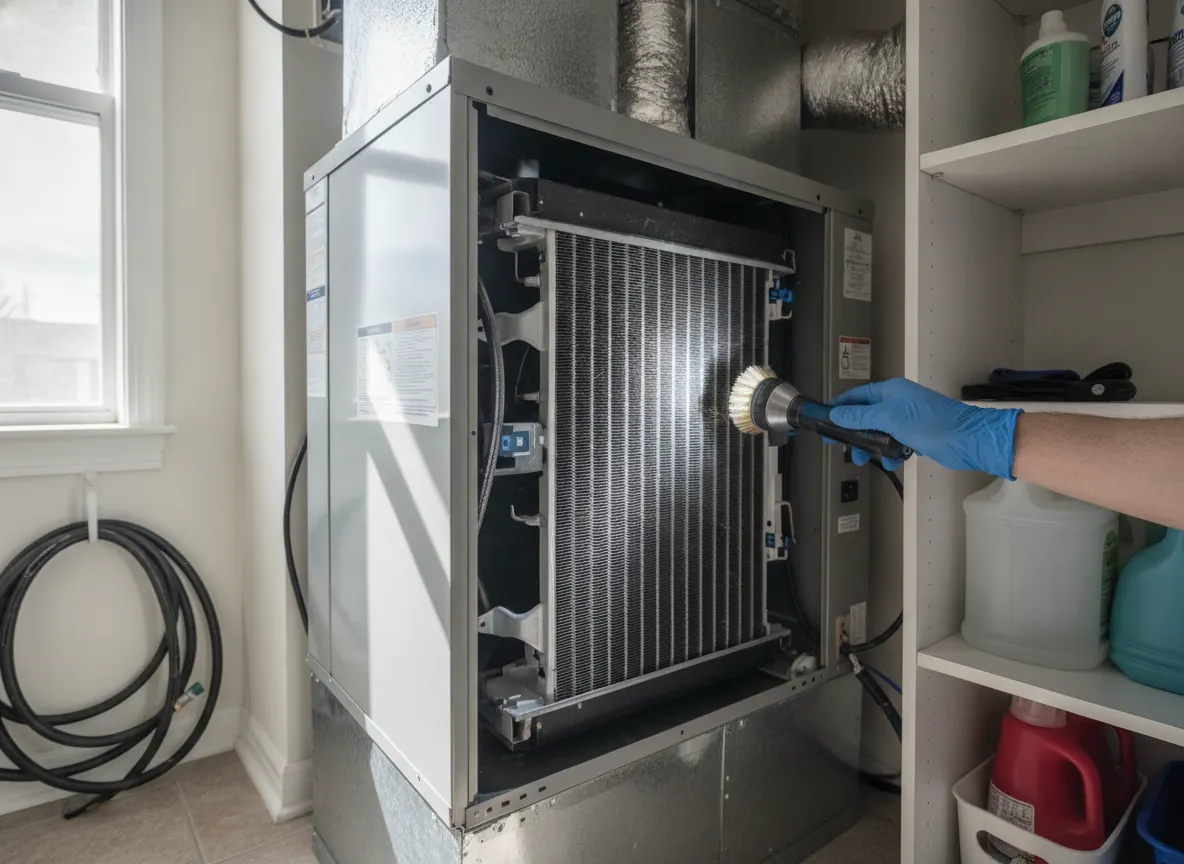
The cooling coil is wet by design while the system runs. Dust that collects on it, or on the blower and inside the cabinet, can give mold a place to grow, and the air handler then pushes air past it to every room.
Leaky ducts and return-side gaps
Return ducts with gaps can draw humid air from an attic, crawl space or wall cavity into the system. Leaky supply ducts can also cool and wet the spaces around them.
A system that doesn't run long enough to dry the air
Some systems cool the house quickly but shut off before removing much moisture, leaving the air cool but clammy. An HVAC contractor can tell you whether sizing or settings are part of your problem.
Is it really mold?
Dark specks on a register can be dust, soot or mold, and they are hard to tell apart by eye. Clues that point toward mold include spots that return quickly after cleaning, a musty smell when the system starts, visible growth on insulation or inside the air handler, and recent water problems such as an overflowing drain pan. EPA guidance notes that "in most cases, if visible mold growth is present, sampling is unnecessary," but testing can help when you suspect hidden growth. See Do you need mold testing? for details. If anyone in the home has health concerns, talk with a doctor.
What fixing HVAC mold usually involves
A good plan addresses the moisture, not just the spots. EPA puts it plainly: "If you clean up the mold, but don't fix the water problem, then, most likely, the mold problem will come back." Depending on what an on-site assessment finds, the work may include:
- Clearing the condensate drain and cleaning or replacing the drain pan.
- Cleaning the coil, blower and air handler cabinet.
- Cleaning or replacing affected registers and sections of duct, and replacing wet duct insulation.
- Sealing and insulating ducts so they stop sweating, and fixing return-side leaks.
- Addressing humidity in the attic or crawl space around the equipment, and checking system sizing and settings.
Avoid spraying household cleaners into ductwork or the air handler yourself; ask the companies you hire how they handle cleaning inside the system.
When you need an HVAC contractor
HVAC mold jobs often involve two kinds of work: mold cleanup and mechanical work on the system itself. South Carolina has no mold-specific license, and a bill (H.5109) to create one was introduced in 2026 but has not passed as of October 2026. Mechanical work is different. Per the SC Contractor's Licensing Board's 2023 legislative update for general and mechanical contracting, "a license is now required when the total cost of construction is greater than $10,000." Separately, the City of Charleston says work on an existing structure in the Special Flood Hazard Area, including HVAC ductwork replacement, requires a permit.
In practice, if the job involves replacing ductwork, repairing or replacing equipment, or rerouting drain lines, ask who will do that part and whether they hold the SC license that fits the job's size. More background is in our post on South Carolina mold license law. This is general information, not legal advice.
How much does HVAC mold removal cost?
HVAC is one of the costlier places to find mold because so much of the system is hard to reach. These are typical national ranges from cost guides, 2024–2026, not quotes:
| Item | Typical range |
|---|---|
| HVAC system incl. ducts | $3,000–$10,000 |
| Mold inspection | $450–$800 |
| Air sample testing | $250–$350 (advanced up to $700) |
| Per square foot of affected area (surrounding materials) | $10–$30 |
A whole-system job near the top of that range may cross the $10,000 threshold mentioned above, which is one more reason to get the scope in writing. Our HVAC and duct mold page explains how quotes are usually structured, and the mold remediation cost guide covers other areas of the home.
Questions to ask before you hire
- What is causing the moisture, and does the quote fix it?
- Which parts will a remediation company handle, and which will an HVAC contractor handle?
- What training and certifications do your workers have, and what insurance do you carry?
- Does the firm doing the mechanical work hold the SC license or registration the job requires, and is a permit needed?
- What is included, in writing, and how will you confirm the system is clean and dry?
Frequently asked questions
Why is mold coming through my AC vents?
Usually because part of the system stays wet. Air conditioners pull moisture out of humid air, and that water collects on the coil and in the drain pan. A clogged drain, ducts sweating in a hot attic or crawl space, or cold registers meeting humid room air can all keep surfaces damp long enough for mold to grow.
How much does HVAC mold removal cost?
Typical national ranges from This Old House and Fixr put mold remediation for an HVAC system, including ducts, at about $3,000 to $10,000. A single moldy register or a small area near the air handler may cost less. These are estimates from cost guides, not quotes; the real price depends on an on-site assessment of the system.
Do I need an HVAC contractor or a mold company?
Often both. A remediation company can clean affected areas, but problems with the coil, drain line, equipment or duct replacement are mechanical work. Per the SC Contractor's Licensing Board's 2023 update, a license is required when the total cost of construction is greater than $10,000. Ask who will do each part. This is general information, not legal advice.
Is the black dust on my vents mold?
Not always. Dark specks on registers can be dust, soot or mold, and they can look alike. If wiping them away brings them back quickly, or you notice a musty smell when the system runs, it is worth having the system looked at. Our testing guide explains when sampling is useful and when it isn't.
Get HVAC mold quotes in the Charleston area
If you're seeing or smelling mold around your vents, a free, no-obligation quote request takes about a minute, and we usually reply the same day. Related reading: Does attic mold need to be removed? and DIY mold removal and the 10-square-foot rule.