
Mold Removal in Charleston & the Lowcountry
Found mold that is spreading, coming back or bigger than a bathroom wipe-down? We connect Charleston-area homeowners with local mold inspection and remediation companies for free, no-obligation quotes, so you can compare scopes and prices side by side.
Get a Free Quote Call (727) 300-6656Why mold keeps coming back in Charleston homes
Mold is a moisture problem first. Charleston’s climate keeps moisture high for much of the year: the SC State Climatology Office reports an August mean relative humidity of 79%, and NOAA normals show about 52.5 inches of rain a year, with June through September the wettest stretch. Older plaster walls, raised homes with damp crawl spaces, hard-working air conditioners and the occasional storm or tidal flood all give mold a place to start.
That is why spraying bleach on a stain rarely ends the problem. The EPA puts it plainly: “If you clean up the mold, but don’t fix the water problem, then, most likely, the mold problem will come back.” Real mold removal, usually called remediation, pairs cleanup of the growth with a fix for the moisture that fed it.
The EPA 10-square-foot guideline
The EPA says that if the moldy area is less than about 10 square feet, roughly a 3-by-3-foot patch, a homeowner can usually handle it. Above that, or when mold is inside walls, in the HVAC system or tied to sewage or flood water, most people bring in a professional. Our article on the DIY 10-square-foot rule covers when doing it yourself is reasonable. If you hire, the EPA advises: “make sure the contractor has experience cleaning up mold.”
Signs the job is likely beyond DIY:
- Growth covering more than about 10 square feet, or in several rooms
- Mold that returns after cleaning
- Soft or stained drywall, which suggests growth inside the wall
- A musty smell from vents or the crawl space
- Recent flooding, a roof leak or a long-running plumbing leak
What a remediation company typically does
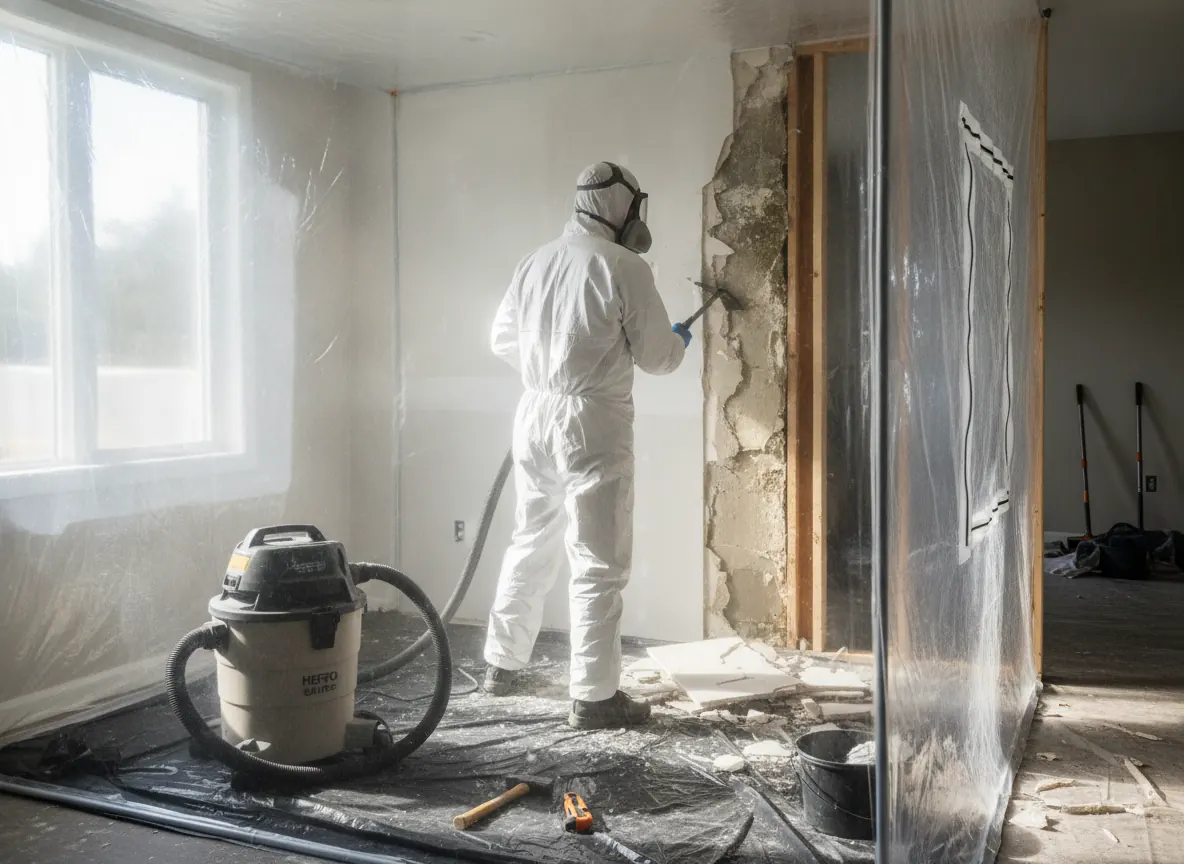
A remediation company will typically start by confirming the moisture source and the extent of the growth, sometimes from an independent mold inspection report. It then sets up containment: plastic sheeting, often with a zipper door, closes off the work area, and an air scrubber with HEPA filtration keeps spores from drifting into the rest of the house.
Inside containment, crews remove porous materials that cannot be cleaned, such as wet drywall, insulation or carpet pad, and bag them for disposal. Hard surfaces like framing are cleaned, HEPA-vacuumed and wiped. Dehumidifiers and fans then dry the area to normal moisture levels before anything is closed back up.
The last step is clearance: a visual check, moisture readings and sometimes air sampling, ideally by someone independent, to confirm the job is done before rebuild starts.
Mold removal, step by step
See the full mold remediation process for more detail on each stage.
Request quotes
Describe the problem on our free quote form. We usually reply the same day and connect you with local companies that serve your area.
Assessment and written scope
Each company looks at the affected area and moisture source and gives a written scope: what gets removed, what gets cleaned and how containment is handled.
Fix the moisture source
A roof leak, plumbing leak, HVAC condensation or crawl space humidity has to be addressed, or the mold returns.
Containment, removal and cleaning
The work area is sealed, damaged materials come out, and surfaces are cleaned and HEPA-vacuumed.
Drying
Dehumidifiers and air movers bring materials back to normal moisture before rebuild.
Clearance and rebuild
After a clearance check, drywall, insulation and paint go back in. Rebuild work may fall under SC contractor licensing or registration rules.
What mold removal typically costs
Typical national ranges from cost guides, 2024–2026 — not quotes.
| Item | Typical range |
|---|---|
| Mold remediation, typical job | $1,200–$3,750 (This Old House avg about $2,300); Fixr avg about $3,500 |
| Per square foot of affected area | $10–$30 |
| By size: 50 / 100 / 200 / 500 / 1,000 sq ft | $500–$1,250 / $1,000–$2,500 / $2,000–$5,000 / $5,000–$12,500 / $10,000–$25,000 |
| Whole house (e.g. after a flood) | $10,000–$30,000 |
Location matters as much as size: crawl space mold, attic mold and HVAC systems each price differently. Your real figure comes from the company’s on-site assessment. The mold remediation cost guide breaks down every factor.
South Carolina has no mold-specific license. South Carolina’s environmental agency (SCDES) says there are no state or federal laws, regulations or standards for mold, and it cannot test or inspect for mold in homes. A bill (H.5109) to create a state mold board was introduced in 2026 but has not passed as of October 2026. So ask any company about its training and certifications, its insurance, and the SC contractor license or registration for any rebuild work, and get the scope in writing. See what South Carolina law says. This is general information, not legal advice.
We help homeowners in Charleston, James Island, Goose Creek, Hanahan and across our service areas.
Frequently asked questions
What is the difference between mold removal and mold remediation?
People use the terms interchangeably. Strictly, “removal” suggests getting rid of every spore, which is not realistic because mold spores are naturally present indoors and outdoors. “Remediation” describes the real goal: removing the growth, cleaning affected surfaces, fixing the moisture source and returning the area to normal conditions so mold does not come back.
Can I remove mold myself?
The EPA says that if the moldy area is less than about 10 square feet, a homeowner can usually handle it. Larger areas, mold inside walls or ductwork, or growth tied to flood or sewage water usually call for a professional. Whatever the size, fix the water problem, or the EPA says the mold will most likely come back.
How much does mold remediation cost in Charleston?
Cost guides put a typical job at about $1,200–$3,750, with This Old House citing an average near $2,300 and Fixr about $3,500. Per square foot, expect roughly $10–$30. A whole house after a flood can run $10,000–$30,000. These are national estimates; the real price comes from the company’s on-site assessment.
How long does mold remediation take?
It depends on the size of the affected area, how much material has to come out and how long drying takes. A small, contained job is often quicker than a flood-damaged ground floor. Ask each company for an estimated timeline in the written scope, including drying time and any clearance check before rebuild starts.
Do mold remediation companies need a license in South Carolina?
South Carolina has no mold-specific license, and a 2026 bill to create one (H.5109) has not passed as of October 2026. Rebuild work such as drywall or insulation can fall under SC contractor licensing or registration thresholds. Ask about training, certifications, insurance and any contractor license. This is general information, not legal advice.
Seeing or smelling mold? Get a clear plan.
Free, no-pressure quotes across Charleston, Mount Pleasant, North Charleston, Summerville and the Lowcountry.