
Flood & Water Damage Mold in Charleston
Water came in from a storm, a king tide, a burst pipe or a roof leak? The clock on mold starts right away. We connect Charleston-area homeowners with local mold inspection and remediation companies for free, no-obligation quotes on drying and mold cleanup.
Get a Free Quote Call (727) 300-6656Charleston’s long history with water
Flooding is part of life in the Lowcountry, from sunny-day tidal flooding to hurricanes. NOAA’s high-tide flooding counts for the Charleston Harbor gauge (station 8665530, using NOAA’s derived thresholds) show 14 flood days in both 2019 and 2020, and 19 minor plus 2 moderate flood days in 2023, before dropping to 7 in 2024 and 7 in 2025. Each of those tides can push salt water into low streets, garages and crawl spaces.
The big storms are etched in local memory:
- Hugo (1989): made landfall near midnight on September 22, 1989 at Sullivan’s Island as a Category 4 storm. The National Weather Service recorded storm tides of 15.0 feet above mean sea level at Isle of Palms, 11.9 feet at Folly Beach and 10.4 feet in downtown Charleston, with about $7 billion in damage.
- Matthew (2016): Charleston Harbor peaked at 9.29 feet MLLW on October 8, 2016, the third highest on record at the time.
- Irma (2017): the harbor reached 9.92 feet MLLW on September 11, 2017, also third highest on record at the time.
- Idalia (2023): the harbor peaked at 9.23 feet MLLW on August 30, 2023, which the NWS preliminarily ranked 5th highest since 1921; it coincided with a supermoon.
- Debby (2024): Summerville recorded 18.25 inches of rain, Charleston totals ran as high as 15 inches, and a peak of 22.02 inches near Moncks Corner was the second-highest tropical-cyclone rainfall total on record in South Carolina.
Whatever the source, the rule is the same. The EPA says, “It is important to dry water-damaged areas and items within 24-48 hours to prevent mold growth.” South Carolina’s environmental agency gives the same window: materials should be cleaned and dried within 24 to 48 hours. Our guide to mold after a hurricane or king tide covers the first days in more detail.
What a water damage and mold company typically does
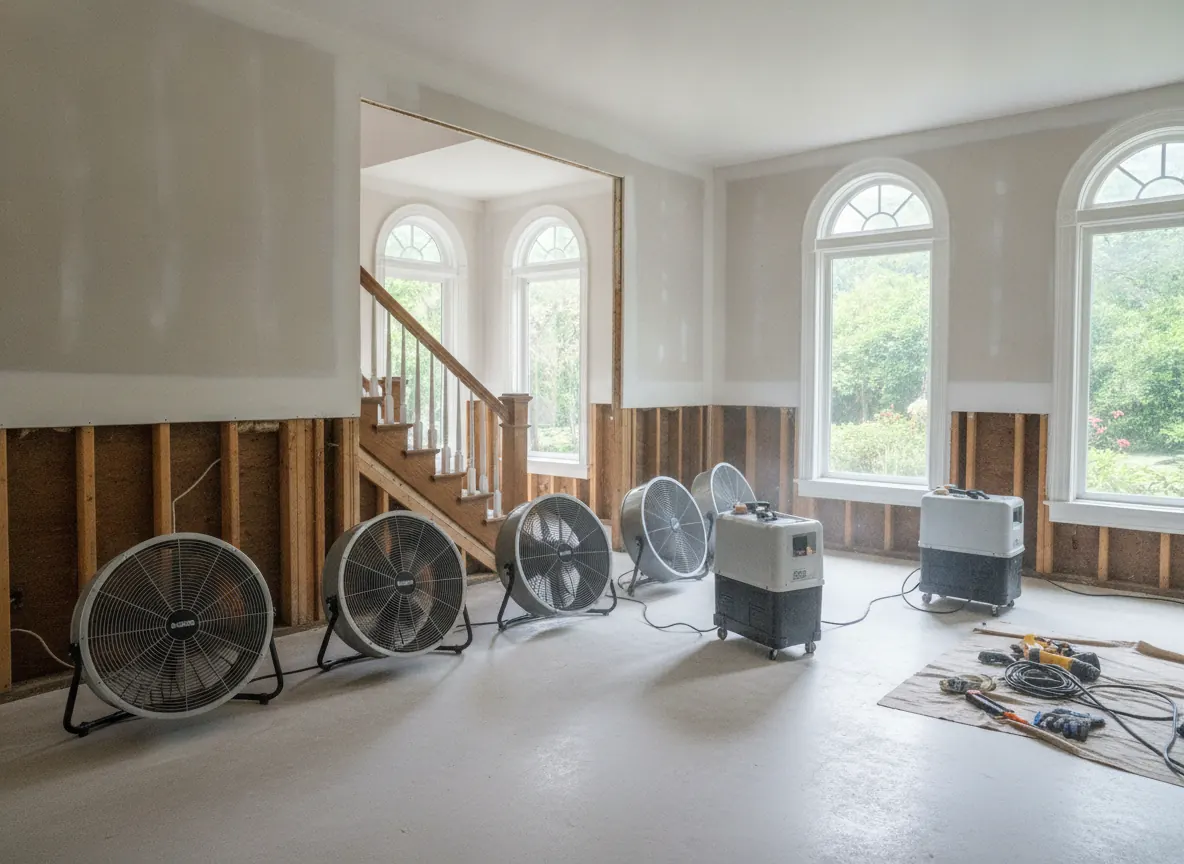
After a flood, a remediation company will typically start with water removal and moisture mapping, using meters to find how far water wicked up walls and under floors. Wet drywall is often cut out a set distance above the waterline (a “flood cut”), and soaked insulation, carpet and pad are removed so wall cavities can dry.
Fans and dehumidifiers then run until materials return to normal moisture levels. Where mold has already started, the work moves into containment, HEPA-vacuuming and cleaning of framing, as described on our mold removal page. Flood water can carry sewage and debris, so porous items it touched are usually discarded.
Raised homes often take water underneath first. If yours did, see crawl space mold as well.
What to do after water gets in
The full mold remediation process explains each stage of a professional job.
Stay safe and document
Turn off power to wet areas if it is safe, take photos and video, and call your insurer.
Request quotes fast
Use our free quote form or call. We usually reply the same day.
Water removal and drying
Wet materials come out and drying equipment goes in, ideally within that 24–48 hour window.
Mold cleanup if needed
Any growth is contained, removed and cleaned before walls are closed.
Permits and rebuild
Check permit rules before repairs are finished (see below), then rebuild drywall, insulation and floors.
City of Charleston flood-zone permits and the 50% rule
If your home is in the City of Charleston’s Special Flood Hazard Area (Flood Zones AE and VE), the city says all work on an existing structure requires a permit, including storm-damage repairs, HVAC ductwork replacement and non-structural interior renovations. Permits must be obtained before repair work is completed; the City Permit Center handles repair permits.
The city also applies the federal floodplain “50% rule.” If the cumulative cost of improvements over a one-year period reaches 50% of the structure’s market value (Substantial Improvement), or if damage reaches 50% of its pre-damage value (Substantial Damage), the whole building must be brought into full floodplain compliance. For permits close to that line, such as 45–49%, the city requires a cost estimate and affidavit. Other towns and Charleston County have their own rules, so check with your local building office. This is general information, not legal advice.
South Carolina has no mold-specific license. South Carolina’s environmental agency (SCDES) says there are no state or federal laws, regulations or standards for mold, and it cannot test or inspect for mold in homes. A bill (H.5109) to create a state mold board was introduced in 2026 but has not passed as of October 2026. So ask any company about its training and certifications, its insurance, and the SC contractor license or registration for any rebuild work, and get the scope in writing. See what South Carolina law says. This is general information, not legal advice.
What flood mold cleanup typically costs
Typical national ranges from cost guides, 2024–2026 — not quotes.
| Item | Typical range |
|---|---|
| Per square foot of affected area | $10–$30 |
| By size: 100 / 500 / 1,000 sq ft | $1,000–$2,500 / $5,000–$12,500 / $10,000–$25,000 |
| Whole house (e.g. after a flood) | $10,000–$30,000 |
Your actual figure depends on how high the water rose, how long it sat and what it touched, and comes from the company’s on-site assessment. See the mold remediation cost guide for the full breakdown.
Frequently asked questions
How quickly can mold grow after a flood?
The EPA says water-damaged areas and items should be dried within 24–48 hours to prevent mold growth, and South Carolina’s environmental agency gives the same window. After that, the risk rises quickly, especially in Charleston’s summer humidity. Start drying immediately, remove soaked materials and get professional help early if water reached walls, floors or the crawl space.
How likely is mold after water damage?
It depends on how fast things dry. Materials dried within 24–48 hours are far less likely to grow mold. Drywall, insulation and carpet that stay wet longer, or water that sat in a crawl space or wall cavity, are common places for growth. A moisture check can show what is still wet even when surfaces look dry.
Do I need a permit to repair flood damage in Charleston?
In the City of Charleston’s Special Flood Hazard Area (Zones AE and VE), the city says all work on an existing structure requires a permit, including storm-damage repairs, HVAC ductwork replacement and non-structural interior renovations. Permits must be obtained before repair work is completed. Other jurisdictions have their own rules. This is general information, not legal advice.
What is the 50% rule for flood-damaged homes?
In the City of Charleston’s flood zones, if repair or improvement costs over a one-year period reach 50% of the structure’s market value, or damage reaches 50% of its pre-damage value, the building must be brought into full floodplain compliance. The city requires a cost estimate and affidavit for permits near that threshold. Check with the city.
Does insurance cover mold after a hurricane?
It depends on your policies and the cause. Standard homeowners policies generally treat flood water differently from wind-driven rain or a burst pipe, and flood damage is usually covered by separate flood insurance. Many policies limit mold coverage. Document everything, call your insurer quickly and keep written scopes and invoices from every company involved.
Seeing or smelling mold? Get a clear plan.
Free, no-pressure quotes across Charleston, Mount Pleasant, North Charleston, Summerville and the Lowcountry.