
One of the first things many homeowners do after spotting a dark patch on a wall is search for a mold test. It feels like the responsible move. But the U.S. Environmental Protection Agency's guidance is more nuanced than "test first," and knowing what it says can save you a few hundred dollars, or point you to testing that is actually worth paying for.
Charleston Mold Experts is a free quote service: we connect Charleston-area homeowners with local mold inspection and remediation companies for free, no-obligation quotes. We don't test or inspect anything ourselves; this article explains the guidance so you can decide what to ask for.
What the EPA mold guidelines say about testing
The EPA's homeowner publication, A Brief Guide to Mold, Moisture and Your Home, is direct on this point: "In most cases, if visible mold growth is present, sampling is unnecessary." The reasoning is practical. If you can see mold, you already know there is a moisture problem and growth to clean up, and a lab report won't change those two steps.
The same guide stresses moisture over measurement: "If you clean up the mold, but don't fix the water problem, then, most likely, the mold problem will come back." It also gives a size guideline. If the moldy area is less than about 10 square feet, a homeowner can usually handle it, which we cover in our post on the EPA 10-square-foot rule.
There is no official "safe level" of mold
Many people expect a test result to come back as pass or fail. It doesn't work that way. South Carolina's Department of Environmental Services says that "because there are no state or federal laws, regulations, or standards for mold or indoor air quality," it "cannot test, monitor or inspect for mold or indoor air quality in homes or public buildings."
In practice, that means two things for Charleston homeowners:
- The state won't come out and test your home, so any testing is something you arrange and pay for privately.
- There is no government number to compare a lab result against. Air samples are usually read by comparing indoor results with an outdoor sample taken at the same time.
South Carolina also has no licensing program for mold inspectors or remediators. A bill (H.5109) to create one was introduced in 2026 but has not passed as of October 2026. See our post on South Carolina mold license law for details. This is general information, not legal advice.
When mold testing actually helps
"Often unnecessary" is not the same as "never useful." Testing or a professional inspection tends to earn its cost in situations like these:
You smell mold but can't find it
A persistent musty odor with no visible growth suggests something may be hidden behind drywall, under flooring, in a crawl space or inside HVAC equipment. A visual inspection with moisture readings is usually the starting point, and sampling may help confirm what's going on.
After a flood, leak or storm
After hurricane flooding, a king tide or a plumbing leak, an assessment can help map how far water and growth reached before walls are opened. EPA and South Carolina's environmental agency both point to the same window: dry water-damaged areas within 24 to 48 hours to prevent mold growth.
You need documentation
Buying or selling a home, dealing with a landlord, or filing an insurance claim may call for written findings. Ask the party who needs the documentation exactly what they will accept before you pay for testing.
Checking the result after remediation
Some homeowners arrange a post-cleanup check, sometimes called clearance testing, to confirm the work area is clean and dry before walls are closed up. If you want this, agree on it, and on who does it, before the work starts.
Health concerns
We don't give medical advice. If someone in the household has symptoms or a condition that worries you, talk with a doctor, who can tell you whether information about the home would be useful.
Mold inspection vs. mold testing
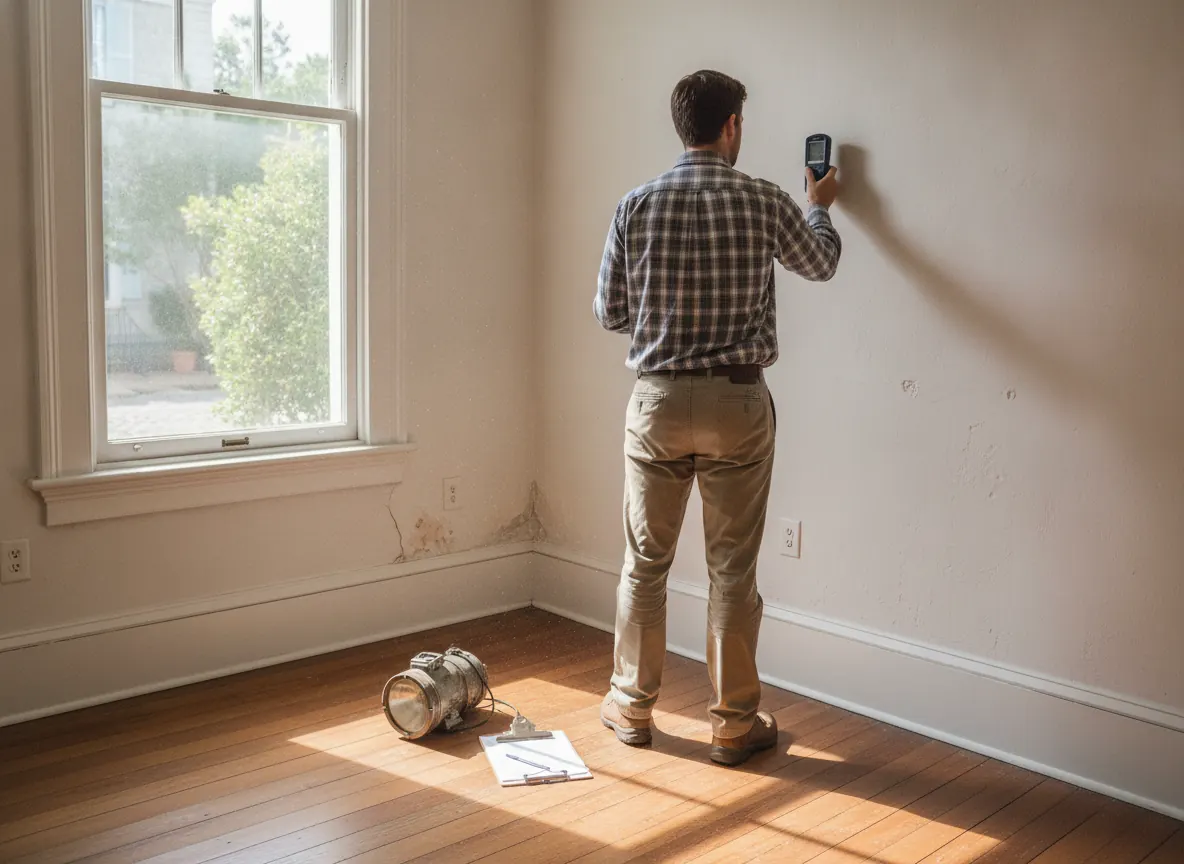
The two terms get used interchangeably, but they are different services. A mold inspection is a visual assessment, usually with moisture meters and sometimes thermal imaging, to find growth and the water feeding it. Mold testing means taking samples (air, surface swab or tape lift) and sending them to a lab. Many inspections include a few samples; many don't need them. Our mold inspection and testing page explains how local quotes are usually structured.
How much does mold testing cost?
These are typical national ranges from cost guides, 2024–2026, not quotes:
| Item | Typical range |
|---|---|
| Mold inspection | $450–$800 (HomeAdvisor data via Bob Vila: $299–$1,014, avg about $656) |
| Air sample testing | $250–$350 (advanced up to $700) |
| Mold remediation, typical job | $1,200–$3,750 (This Old House avg about $2,300); Fixr avg about $3,500 |
Price depends on the size of the home, how many samples are taken and how quickly results are needed. If you can already see the problem, it may make more sense to put that money toward fixing it. Our mold remediation cost guide breaks down what cleanup typically costs by size and location.
Independent testing or the remediation company?
Some homeowners prefer an independent inspector who only assesses and doesn't do the cleanup, so the person measuring the problem isn't also pricing the fix. Others are happy to have a remediation company assess its own scope. Neither approach is required in South Carolina. Whichever you choose, ask:
- What will you sample, where, and why? How will the results change the plan?
- What training and certifications do you have, and what insurance do you carry?
- Which lab analyzes the samples, and will I get the full lab report?
- Is a written scope and price included with the findings?
Frequently asked questions
Does the EPA recommend mold testing?
Not as a default. EPA's homeowner guide says that in most cases, if visible mold growth is present, sampling is unnecessary, because the next steps are the same: fix the moisture and clean up the mold. Testing can still help when mold is suspected but hidden, or when you need documentation, so it is a judgment call rather than a requirement.
How much does a mold inspection cost?
Typical national ranges from cost guides put a mold inspection at about $450 to $800 (Fixr). HomeAdvisor data cited by Bob Vila shows $299 to $1,014, with a national average around $656. Air sample testing typically runs $250 to $350, and advanced testing up to about $700. These are estimates, not quotes.
Is there a safe level of mold set by law?
South Carolina's environmental agency says there are no state or federal laws, regulations or standards for mold or indoor air quality, and that it cannot test, monitor or inspect for mold in homes. So there is no official number to compare a lab result against. Results are usually interpreted by comparing indoor and outdoor samples. This is general information, not legal advice.
Should the same company test and remove the mold?
It is your choice. Some homeowners prefer an independent inspector whose only job is assessment, so the person measuring the problem is not also pricing the fix. Others are comfortable with a remediation company assessing its own scope. Either way, ask what will be sampled, why, what it costs and how the results will change the plan.
Get a free quote for inspection or remediation
Whether you want an assessment first or are ready to deal with growth you can already see, a free, no-obligation quote request takes about a minute, and we usually reply the same day. Related reading: Does attic mold need to be removed? and mold coming through your AC vents.